Wednesday, February 22, 2017

What are the Differences between the VantageScore and the FICO score?


Having a good credit score is important to every American as it affects many things we encounter in our daily lives: credit cards, loans and even car insurance.  There are many places you can get a credit score: your bank, online and you may even be given a summary of your scores when you apply for a new loan.  You may have heard the term FICO score and VantageScore: which score are you getting and does it matter?

The FICO score

Before the credit scoring system, bankers accessed a person’s credit by weighing such factors character, relationship with the bank, reputation and whether they paid their bills on time.  They didn’t have any quantitative way to analyze whether or not a customer was a good risk: lenders had neither the predictive data nor the math to calculate a customer’s ability to pay back a loan.  This changed in the 1950s, when Bill Fair, an engineer, and Earl Isaac, a mathematician, got together and laid out the foundation for what would be the FICO credit score.  The company they founded was called Fair Isaac (it was renamed FICO in 2009).  The score was initially a flop; they only had a few customers in the beginning and they struggled to market the concept of computerized credit scores.  The technology and methodology of data collection was improved over the years and eventually, in the 1980s, the credit score became available to most lenders, and was widely adapted to screen prospective credit applicants by 1995.
There have 7 versions of the FICO score released over the years, the latest being FICO 9. In addition, there are many different “flavors” of your FICO score, like a score tailored to the auto industry, the credit card industry and score models designed with other loan products in mind.

VantageScore

Credit scoring is big business.  Not only do lenders buy the scoring models, but credit scores are sold to consumers. For a while, FICO had a real monopoly on the sale of credit scores and credit score models.   In an attempt to compete with FICO, the credit bureaus developed their own scoring system, the VantageScore.  VantageScore has had 3 incarnations: VantageScore 1.0, VantageScore 2.0 and VantageScore 3.0.
Initially, the VantageScore point system scored between 500 and 950, but to win over more customers,   they thought it best to mimic the FICO system score range of 300 – 850.

Which Score am I Seeing?

As we mentioned, there are many versions of both the FICO score and the VantageScore.  Lenders are slow to adopt new technologies, so while FICO 9 has been around for a couple of years now, most lenders are still using FICO 08 or even FICO 04.  Where you get your credit score matters; if you get your credit score from:
  • A lender during the course of the loan, you will most likely be getting a FICO credit score. Which flavor of the score you are seeing depends on the loan product for which you are applying.
  • Your credit card statement, you are getting your FICO score.
  • A website to get a free credit score, like Credit.com, bankrate.com, creditkarma.com or credit sesame, you are going to get your VantageScore.
  • Credit bureaus, you will get your Vantage Score.
  • com, you are getting your FICO score.

Differences in Weighting Factors

The FICO score weighs dozens of factors, but each of these factors falls into one of 5 groups.  Each of the groups of factors affects your credit score approximately by these percentages:
  • Payment History: 35% of your score
  • Amount of Credit Used: 30% of your score
  • Age of Accounts: 15% of your score
  • New Credit: 10% of your score
  • Credit Mix: 10% of your score
The VantageScore was really a “from scratch” design, and as a result, it weights things differently than the FICO score:
  • 32% payment history
  • 23% credit utilization (amount of credit used/divided by credit limit)
  • 5% balances
  • 13% depth of credit
  • 10% recent credit
  • 7% available credit

Other Differences

The math and formulas for the credit scoring models is a closely held secret, so all the differences between the two cannot be definitively given.  However some things are known:
  • In the older versions of the FICO score (an older version will most likely be used to calculate your score at lenders), paid collections count negatively against your credit score. In the newer version of VantageScore, (3.0), paid collections do not count against your score.  Once lenders adopt FICO 9, you will not be dinged for having a paid collection when you and/or lenders review your credit score.
  • There are differences in how old data must be in order to register in the scoring calculation. VantageScore can score data that’s as new as only 6 months old; FICO usually requires a year’s worth of data in order to calculate a score.
  • The FICO scoring model also uses “buckets” when calculating credit scores. With a bucket, consumers with similar credit histories are put into categories with maximum scores.  Even if other credit scoring factors improve significantly, you are never going to get higher than that maximum score.

In Conclusion

FICO says that 90% of lenders use their credit scoring model and this should speak for itself.  VantageScore may see wider adaption by creditors in the future, but as of yet the score is used in relatively few lending situations.  Credit scores only matter when you are applying for loans; in addition, a credit score is only good for the instant in time it was calculated: scores change frequently.  Generally speaking, you will never see the actual credit score that the lender used to evaluate your candidacy for a specific loan product unless the lender shows it to you.  The scores you may get at free websites or even ones that you buy online are an indication of your credit health.  If you feel as though your credit score is too low or your overall credit needs a boost, it may be time to seek some professional credit repair.

What You Must Know If You Just Got Your First Credit Card

Are you excited by getting your first credit card, as if whatever you charge is magically free and the credit card is some kind of license to spend? That mindset could automatically start you off on the wrong foot with your credit.
According to an Experian Survey released last year and updated in 2016, the millennial generation (which includes you if you’re in your 20s, when you’re most likely to get your first credit card) has the lowest credit scores out of all the generations. In fact, 67% of those polled did not understand how credit scores are computed and they have a habit of thinking their debt is not as bad as it is and that their credit scores are better than they are.
According to the Experian score categories, a good (prime) credit score falls between 661 and 780 but the surveyed millennials thought their score was 654 (considered non-prime credit) when it was really 625 (dangerously close to the sub-prime credit score cut-off at 600).
In 2016, 68% of millennials were carrying debt (including student loan debt), more than half had already had problems spending and making payments on their credit cards and 64% believed their debt is holding them back from achieving their life goals.
Here’s what you must know before you whip out that new credit card, swipe it for the first time and make millennial credit card mistakes that could possibly screw up your credit.

Your credit card is not cash (for when you don’t have any)
Getting a credit card should not change your financial situation or your monthly budget in any way (although handling credit responsibly will earn you the best interest rates when you go to borrow money for a future car loan or mortgage).
Many people mistakenly treat their credit cards as an extension of their income and purchase things they want or need with a credit card when they don’t have the cash.
When you spend more than you can afford to pay by the payment due date, you carry the balance to the next month and the interest rate is charged and added to your balance which makes the balance grow. It is easy to max out your credit cards very quickly this way, which happens when you hit the spending limit on the card.
This puts stress on your budget and causes your credit score to go down substantially as lenders like to see a history of credit use that is at least below 30% (and often below 15%) of the credit available to you.
The only way to avoid this negative spending pattern is to only charge what you can afford in cash and pay it all off before the payment due date and the only reason is for building a good credit history.

Your credit card is not an emergency fund
Many people say they got a credit card to use “only for emergencies.” In fact, the Experian data found that nearly half (46%) of millennials maxed out a credit card by using it for an emergency. Even if you only used it for true emergencies (flat tire, burst water heater, medical deductible payment) your balance would build quickly and the interest charged would cause it to compound and grow even higher every month, making it difficult to pay off and impossible to use for the next emergency.
Responsible credit use means protecting yourself from charging on credit cards for emergencies by saving up a cash emergency fund. Even a few hundred dollars to start can cover common car emergencies such as flat tires and new batteries.

Due dates are not a request
According to a 2012 VantageScore report about how credit behaviors affect credit scores, one late credit payment can cause your credit score to drop substantially (from 60-120 points) into the next lowest credit category depending how high your starting credit score was and whether you missed the heavier-weighted auto loan, mortgage or student loan payment. The longer it takes to make that payment (30 days versus 90 days), the deeper your score drop and your score will continue to decrease as long as your payment is not received.  Late payments are a huge part of your credit score (representing 35% of a FCIO credit score). As shown by the VantageScore report, it can take approximately a year to recover your credit score from a missed payment once the account is up to date on payments.
But ruining your credit is not the only problem with paying late as it can affect your balance substantially, too. Due dates are actually a demand for payment by that date (not a request) and most credit card issuers charge late payment penalty rates and fees. Late fees are capped by law at $27 for the first offense and as high as $37 for repeat late payers. Card issuers can raise your interest rate (called a penalty rate or the default rate) up to 29.99% on new purchases for missing a payment and after 60 days of a missed payment, that penalty rate can be applied to your entire balance owed.
Always make payments before the payment due date.

Paying just the minimum payment due is not responsible credit use
This is no secret. Bold type on top of the billing statement on my Capital One credit card reads:
“If you make only the minimum payment each period, you will pay more
in interest and it will take you longer to pay off your balance.”
Because paying your bills on time, as we just discussed above, represents a big portion of your FICO credit score you (like 42% of other millennials surveyed) may think paying your minimum payment on time each month is all you need to do.
But, the minimum payment due only represents the lowest amount your card issuer will accept on your balance, which often only amounts to about 3% to 5% of your total balance. Most of your minimum payment goes to paying down interest and fees which means you will be carrying debt that is hardly reduced (if no other fees or purchases are added) while making your minimum payments.
Always pay more than the minimum due when trying to pay off a balance. A best practive is to pay off the balance in full each month to avoid paying any interest or late fees.

How to avoid making mistakes with your first credit card
Careless spending can get you into credit trouble. In 2016, the Experian survey found 53% of millennials did not know their interest rate, 32% did not know their spending limit and 29% had already maxed out a credit card. Of those who maxed out a card, 39% did so because they were unaware of their spending limit and 38% were not aware of how much they were spending. Don’t let that be you.
Once you receive your new credit card in the mail, note your payment due date and find, review and save the Schumer Box included in your new credit card agreement. This grid shows you all the pertinent facts about the credit card including the interest rate, introductory rates and when they end, credit limit, annual fee, grace period, fees, penalties and more. Note your credit limit, interest rate and grace period and mark your payment due date down in a calendar or set up payment due alert texts so you never miss a payment or max out your new credit card.
According to the Experian data, more than one in every three millennials also thinks it is unnecessary to check their credit report or their credit score, but once you have a credit card you want to be sure your account is being reported to the credit bureaus accurately. Check your credit reports yearly at annualcreditreport.com (the only free service authorized by federal law), monitor your credit score monthly for any substantial changes at one of the free credit score services and learn more about how you can use credit to your advantage.

Should You Ever Agree to Debt Settlement, Part One

Have you heard that there could be a way to pay less than the amount of a debt that you owe?
You may have even heard this on the radio or seen ads online. For-profit debt settlement companies will advertise that they can negotiate with your creditors to allow you to pay a “settlement” to resolve your debt which is less than the full amount you owe, according to the Federal Trade Commission (FTC).
That sounds like the perfect solution to your debt problem but the FTC points out there are many complications with these companies that can actually worsen your debt, your finances and your credit.
A warning from the Office of the Comptroller of the Currency states, “You cannot eliminate an obligation to pay a debt, simply by paying someone a fee regardless of the amount you owe.”
From personal experience, I can tell you there are better ways to accomplish paying less to pay back your debts and get them paid off.
Here’s what you need to know.
Problems with debt settlement companies
Both FTC and the Consumer Financial Protection Bureau (CFPB) have fielded an overwhelming amount of complaints from consumers about debt settlement companies so I’ve outlined some of the many risks in working with a debt settlement company.
  • You pay the debt settlement company all the money before debts are settled. Most of these companies operate by setting up an account for you to deposit money into so you can accumulate enough money for the company to negotiate a settlement with your creditors.
  • Debt settlement companies charge fees. These services are for-profit and they charge higher fees (for each debt settled) than other options you have for settling your debts. According to the CFPB, charging upfront fees for these services is generally prohibited by existing law.
  • Debt settlement can take several years: Typically these payments last for 3 years or more. But life is unpredictable and you run the risk of not being able to keep up with those payments. If that happens you can be dropped from the program before any debts are settled.
  • Collection agencies are not obligated to settle debts for less than you owe. There is no guarantee your creditors will accept a settlement or that your debts can actually be settled.
  • Debt settlement companies try to settle small debts first. That’s because you can accumulate these amounts quicker and pay off small debts faster. But, the settlement does nothing to stop interest and fees from accruing on large debts which actually causes your debts to keep growing while you are accumulating settlement amounts.
  • You stop paying and communicating with the creditor. Debt settlement companies require you to send payments to them and any of your creditors who do not agree to the program will continue reporting you delinquent or defaulted and even try to continue calling you or even suing you to collect the debt. Also, your credit score will tank if that happens as you will be reported as defaulting on a credit account, even though you are making payments to a settlement company.
  • There are a lot of debt settlement scams. If the companies charge you their full fees before settling debts or make promises they can’t deliver or guarantee or offer to settle your debts for outrageously low amounts, beware of scams.

Better ways to settle debts legitimately
You have some other options to settle or pay off your debts for less money in legitimate ways.
  • Settle for less with collections agencies directly using a lump sum payment. If you receive a tax refund, inheritance, insurance settlement, gift, bonus or any type of windfall, you can call up the collections agencies for your loan debts, credit card debts and even medical debts and directly ask them yourself if they will accept a lesser amount if you paid a lump sum. Many times creditors may agree to accept less than owed and you would be doing this to pay less than you owe and also to get them agree to report your account as “satisfied” or “paid as agreed” to the credit bureaus.

You’ll want to do this with the newest debts first (if you have several) as these are hurting your credit report the most. Be aware that if old debts in collections have fallen off your credit report (7 years after the date of the last payment) or they are beyond your state’s statute of limitations for creditors to collect on the debt that you may not need to pay it at all. Any payment on that type of old debt resets that statute of limitations allowing the creditor to begin collecting on the debt and reporting it to the credit bureaus again.

  • Enter a debt management program. A debt management program is not a debt settlement company and instead is managed by a legitimate non-profit credit counseling agency (visit the National Foundation for Credit counseling agency locator tool, to find a reputable local agency) whose mission is to help you pay off your debts for free or a very low fee, depending on your income. Either in person, over the phone or online, a credit counselor reviews and evaluates all your income, debt payments and fixed expenses to figure out what payment you can afford to make to the agency which they will disburse to your creditors every month. These reputable non-profit agencies have agreements and relationships with most credit card and other loan companies and will additionally negotiate reduced fees and interest rates to allow you to pay off your debt faster for less money, as long as you stick to the program.
Not only can you get your debts paid off as quickly as possible in a way you can afford, but you also exit a debt management program with improved credit as all your debts are reported, “paid as agreed” for the duration of your program. You may find you can be approved for a mortgage or a car loan after successfully completing a debt management program.
Remember: Debt settlement costs money in higher fees and higher interest payments and creditor fees with no guarantees debts can be settled and can hurt your finances and your credit. A debt management program works legitimately with your creditors first and may cost very little or nothing while it improves your finances and your credit if you complete the program.
Now that you know how debt settlement companies can hurt your finances and the difference between debt settlement and a reputable debt management program, you will never fall for a debt settlement scam.

How the Burden of Medical Debt Can Affect Your Credit

And What You Can Do About It!
Chances are, if you’re an American, you or someone you know has had trouble paying a medical bill.
According to the Kaiser Family Foundation’s recently released in-depth survey on medical debt, just over one-quarter of U.S. adults said they or a household member had problems paying medical bills in the previous 12 months.
You may be thinking, “Well, I have health insurance, so I won’t have a problem with medical debt.” But here’s the reality: In the survey, among those with medical bill problems, more than 60% were covered by health insurance.
Aside from harassing phone calls, unpaid medical debt can end up in collections and on your credit report. Although many new credit scoring models overlook medical debt, well-established models most lenders are currently using still count it as a negative mark on your credit report and it can affect you negatively for a long time.
By understanding how medical debt happens and what you can do if you incur medical debt, you can at least avoid medical debts that can destroy your credit.
How medical debt happens
Without health insurance, it’s obvious that medical debt happens whenever you incur medical bills you are unable to pay. But what if you do have medical insurance?
According to the Kaiser Family Foundation, health insurance provides financial protection when you need to use health services, but that protection is often incomplete and can result in medical debt.
Health insurance is an agreement between you and the insurer to split the costs of the medical bills in a specific way, according to your plan. You would be responsible for paying the monthly premium as well as your portion of provider charges which appear in terms such as deductibles, co-pays, coinsurance, maximum out-of-pocket expense and balance-billing. The insurer pays the balance of the allowed amount contracted with its in-network providers. When your income or savings falls short of your responsibility, you can incur medical debt.
Here are the most common ways medical debt can happen to you.
  1. The deductible. Most health insurance plans have a deductible, or the amount you must pay before the health plan will pay for covered services. According to Kaiser’s statistics, the average combined deductible per person for 2016 is $5,765 for bronze plans and $3,064 for silver plans. So the deductible is the least amount you need to have in a medical emergency savings account to avoid medical debt. But that’s a lot of money to have saved and many don’t. The Kaiser survey found that in those with health insurance, higher deductibles caused problems with paying medical bills and now you can see why. More than half in the Kaiser survey had medical debt under $5,000. Even after the deductible is met, you are still responsible for your share of the provider bills.
  2. An emergency room visit. Among those with medical debt problems, just over two-thirds said the bills resulted from one hospital stay or accident and that medical bills dragged on long past the initial incident or illness.
  3. Many bills for the same incident: Nearly all (91%) of those who had problems paying medical bills had trouble with bills from at least two health providers (doctor, emergency room, prescriptions, lab fees, diagnostic tests, hospitalization, outpatient treatment, services) for the same incident. Over half had problems with bills from five or more sources.
  4. Losing income. When people can’t work due to their own illness or to care for someone else in their family with any illness, medical debts are even more difficult. Nearly one-third in the Kaiser survey said someone in their household had to take a cut in pay or hours due to the illness that caused the medical bills.
What happens to your medical debt
Most hospitals and health care providers expect to be paid and will start calling after non-payment for 30 days. By 90 days of no payment, unpaid medical bills are referred to collections agencies and that’s when they get reported to your credit report that way.  Next, you will be contacted by the collections agencies with a demand for payment. According to Kaiser, most people who can’t pay initially end up with medical debt handled by a collections agency.
Others opt to put a portion of their medical debt on a credit card which can backfire into high levels of debt on credit cards and monthly payment problems, all of which also end up on your credit report.
Non-payment of debts, debt in collections and high credit card balances all lead to poor credit and low credit scores which can haunt you for a long time.
5 things you can do to manage medical debt
  1. Make sure debts are accurate: Always keep copies of all medical bills and payments receipts. Check all invoices and demands for payment for errors you can dispute immediately with the provider or the collections agency and the credit bureau. Check that dates of service, account numbers, procedures and payments are accurate. If you have many medical debt to handle, a credit repair service may be able to help you more effectively.
  2. Keep a medical emergency fund. Save the amount of your deductible in a cash savings account ready for use. This way, you will be able to afford the deductible in case of a medical emergency and not have to incur a medical bill, put a medical bill on a credit card or have a medical bill go into collections.
  3. Search for a different health plan. If you have a very high deductible health plan and need to use health services often, it may benefit you to search for a plan with a smaller deductible and smaller maximum out of pocket expense even if the monthly premium is a little higher. Check with your employer or healthcare.gov to compare plans.
  4. Always make payment arrangements. If you can’t pay even the co-pay or the entire bill due, make payment arrangements immediately with the healthcare provider. They will often agree to very small monthly amounts (such as $20 per month) to pay off the debt and this will keep it from going into collections.
  5. Try to settle medical debts in collections. Are your medical debts currently listed on your credit report and within If they are and you have some money either from a raise, a bonus, a tax refund or some other windfall that is enough to pay a large portion of the medical debt, call up the provider and ask if they will settle the whole debt for a lesser amount than what is owed. Just be sure they report the debt as “satisfied” or “paid as agreed” to the credit bureaus as part of the settlement agreement.
Another interesting trend I noticed at my last hospital visit was that they offered me a discount if I paid the in-patient hospital co-pay right then while they were confirming the procedure appointment over the phone (which of course I took advantage of.)
The future of medical debt and credit scores
According to FICO, it’s now possible to distinguish between medical and non-medical collection agency accounts at all three major credit bureaus.
FICO has found that consumers with unpaid medical collections are less likely to default on future credit accounts in the future than those with paid non-medical collections.
As a result, both VantageScore 3.0 and the new FICO® Score 9 have deleted medical collections from their scoring models and FICO 9, but medical debt in collections still affects credit negatively on older scoring models.

Transition from Reactive to Proactive Chargeback Management

Functioning in Reactive Mode? The Consequences are Severe.


There are two types of chargeback management, and the strategy merchants pursue will influence much more than just the bottom line—it will impact sustainability and longevity.
Reactive chargeback management might enable merchants to survive, but proactive chargeback management ensures businesses thrive.

Reactive Vs. Proactive

The difference between reactive and proactive chargeback management is more than just strategy, it’s also an entirely different mindset.

Reactive

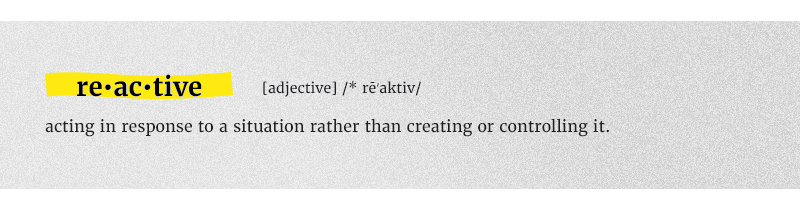
A reactive strategy means waiting until chargebacks become a significant liability and action must be taken. Reactive chargeback management is usually triggered when:
  • Revenue loss is so severe, sustainability has been threatened.
  • Fees and fines are considered excessive.
  • The brand’s reputation has been damaged with both consumers and industry members.
  • MIDs are lost.
  • Loyal customers have switched to the competition.
  • Revenue holds are implemented and restricting cash flow.
  • There aren’t sufficient funds to pay operating costs.

The severity of the situation might vary by merchant, but what prompts the action is usually very similar: mounting risks that weren’t prevented and are now causing severe consequences.

Proactive

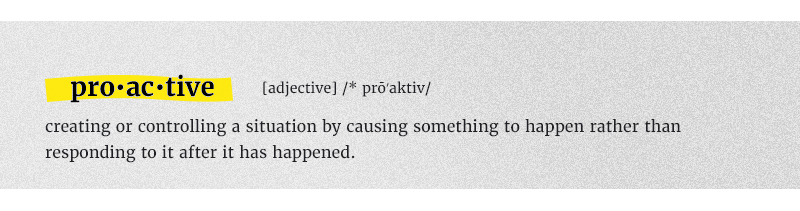
A proactive approach, on the other hand, employs predictive analysis to identify potential threats and avoid significant consequences.
Proactive management acknowledges that chargebacks are an inevitability for any eCommerce business. It is based on the understanding that chargeback rates will eventually rise if nothing is done to manage them.
Rather than waiting to witness the extent of the chargeback problem, is it best to have a plan in place to mitigate risk before it happens. A proactive strategy objectively analyzes the merchant’s skillset and operations to detect vulnerabilities and implements a customized solution to address that business’s unique challenges.
Creating a strategy before it’s needed ensures merchants won’t be tempted to settle for whatever reactive help is available and cost-effective in the moment.

What Defines a Strategy as ‘Reactive’?

How can merchants identify if they’re reliant on reactive solutions and practices? Merchants are in reactive mode if they:
  • Rely on chargeback alerts to avoid liability, rather than create a comprehensive strategy to prevent transaction disputes from happening.
  • Employ blacklists to ban fraudsters after they’ve already attacked once, rather than preventing the unauthorized transactions.
  • Only dispute big-ticket chargebacks to limit excessive revenue loss, rather than effectuating long-term change by improving the merchant’s reputation and challenging faulty consumer behavior.

These are just some of the techniques that are characteristic of a reactive philosophy. Any attempt to minimize risk that generates short-term results instead of addressing the underlying problem would be considered a reactive strategy.

If you suspect you’ve been operating in reactive mode, contact SCU™ today. We’ll conduct a free chargeback analysis and identify opportunities to transition to a proactive chargeback management mindset.


What’s Wrong with Reactive? Why is Proactive So Important?


Merchants who are overly-reliant on reactive chargeback management will find themselves perpetually one step behind—they’ll never get ahead of the problem.
Thus, the longer a merchant relies on reactive strategies, the worse the underlying problem will be and the more severe the long-term damage to the merchant’s organization. It’s possible the merchant isn’t even aware of the damage until it is too late to fix it.
While a reactive merchant will perpetually be one step behind, a proactive merchant will remain one step ahead, gaining a significant competitive advantage. Proactive chargeback management allows merchants to:
  • Retain more revenue
  • Increase profits
  • Preempt threats
  • Identify new monetization opportunities
  • Maintain customer loyalty
  • Reduce processing costs and fees
  • Reduce operating expenses

How Can Merchants Transition to Proactive Chargeback Management?


There is a time and place for reactive solutions, but this mindset should never be a merchant’s primary course of action. Reactive tools, like alerts and blacklists, can be incorporated into a predominantly proactive approach.
Transitioning to proactive chargeback management involves the following:
  • Immediate action: When it comes to chargeback management, time is of the essence. Merchants need products and services that produce immediate results. Integrations should be quick and efficient. For example, SCU offers both non-technical and API integration options, meaning merchants can be up and running in as little as 30 days.
  • Identification of chargeback sources: Unless merchants identify and rectify problems at their source, they’re simply treating symptoms—a reactive strategy. SCU Intelligent Source Detection™ determines what caused the chargeback and how to mitigate future risk.
  • Eradication of merchant error: As much as 40% of chargebacks are caused by undetected and unresolved merchant error. Part of a proactive chargeback management strategy means reviewing policies and procedures on a regular basis to detect issues that could lead to transaction disputes. Merchants have found Merchant Compliance Review to be helpful with that.
  • Critical analysis regarding areas of need: Merchants need to objectively analyze abilities and potential weaknesses to determine what level of assistance is needed. What can be managed in-house and what should be outsourced? How can professional assistance increase efficiency?

These are just some of the basic components of a proactive strategy. Each business is different and requires a customized approach to chargeback management.
If you are interested in replacing your reactive strategy with a proactive approach—and reaping all the financial rewards—contact SCU today. Our specialty is dynamic strategies that evolve in tandem with the emerging challenges of modern eCommerce. We’ll make sure you always remain one step ahead—of both threats and the competition!